How to Make Restaurant-Quality Steak and Eggs Recipe at Home
Introduction
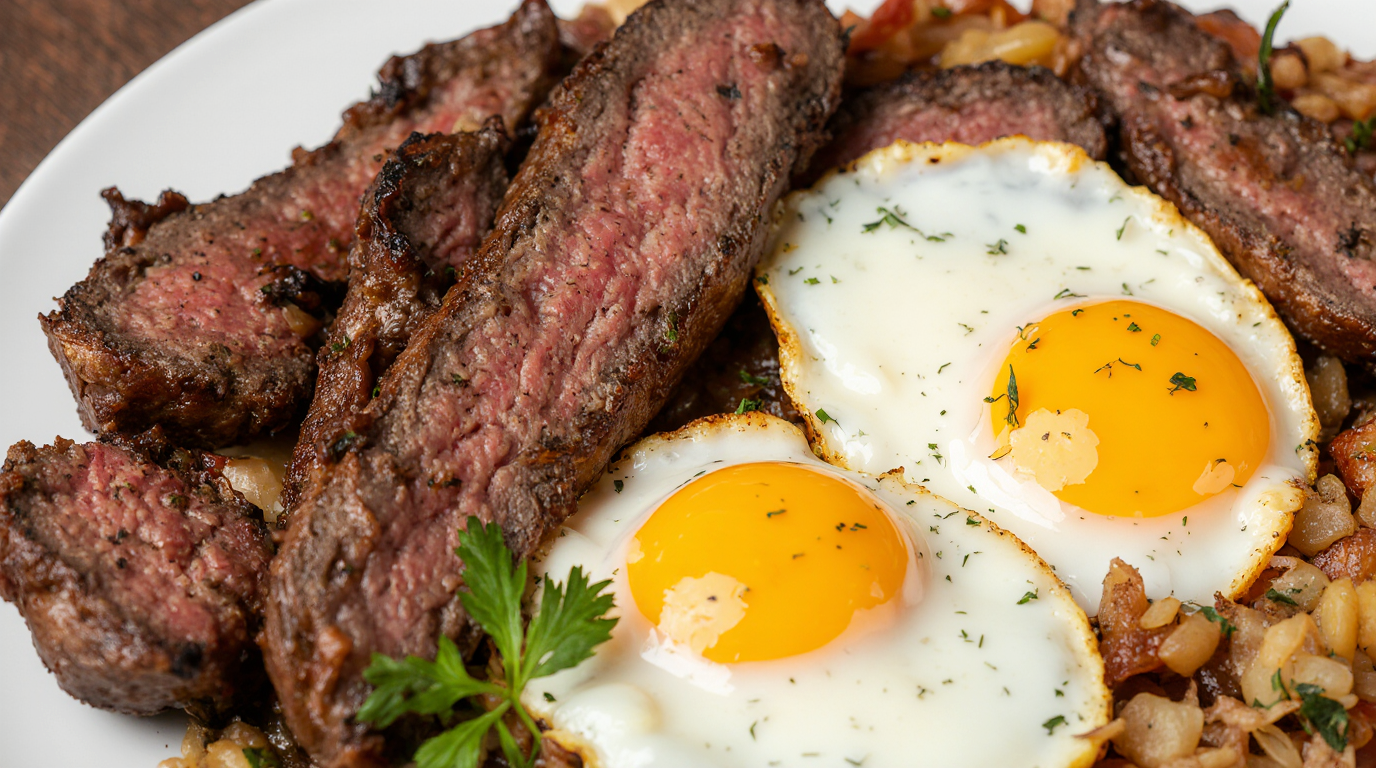
Tired of bland, rubbery eggs and unevenly cooked steak for breakfast? The good news is that mastering a restaurant-quality steak and eggs recipe is simpler than you think. This steak and eggs recipe delivers perfectly seared meat with a golden-brown crust paired with creamy, runny yolks that rival your favorite steakhouse brunch. With over 15 years of culinary experience and countless breakfast experiments, I’ve refined this technique to perfection, and I’m sharing every secret with you today.
In this guide, you’ll discover the best meat selections for this dish, pro cooking hacks that prevent dry steak, timing strategies that sync your proteins to perfection, and creative variations to keep your breakfasts exciting. Whether you’re a beginner cook or a seasoned kitchen enthusiast, this steak and eggs recipe will elevate your morning routine.
Why This Steak and Eggs Recipe Works
This steak and eggs recipe has become a staple in high-protein kitchens for good reason. Here’s why it deserves a spot in your regular rotation:
- Uses affordable, easy-to-find cuts of meat – No need for premium cuts like filet mignon. Mid-range steaks deliver incredible flavor when cooked properly, saving you money without sacrificing taste.
- Ready in under 20 minutes – This steak and eggs recipe fits seamlessly into busy weekday mornings while impressive enough for weekend entertaining.
- Packed with protein and nutrients – Each serving delivers sustained energy, making it perfect for fitness enthusiasts, keto followers, and anyone seeking a satisfying breakfast.
- Incredibly versatile – Swap proteins, adjust seasonings, and pair with different sides to create endless variations of this core steak and eggs recipe.
- Minimal cleanup required – Most cooking happens in one pan, keeping your post-breakfast dishload manageable.

Choosing the Right Meat
Selecting quality meat is the foundation of an exceptional steak and eggs recipe. Here’s how to choose like a pro.
Best Cuts for This Steak and Eggs Recipe
For this steak and eggs recipe, certain cuts outperform others. Ribeye steaks are the top choice—their marbling (fat throughout the meat) keeps them juicy even if cooking times vary slightly. The fat renders during cooking, creating natural flavor and tenderness. New York strip steaks offer a leaner option with a meatier texture and pronounced beef flavor. Sirloin steaks are budget-friendly and work beautifully when cooked to medium-rare, though they require careful attention to avoid overcooking.
For this steak and eggs recipe, avoid overly thin cuts (under 1 inch) as they cook too quickly and risk becoming tough. Aim for steaks between 1 to 1.5 inches thick to allow proper searing while maintaining a tender interior.
Buying Tips for Quality Meat
When shopping for your steak and eggs recipe, look for bright red color with white (not yellow) fat marbling. A good butcher is your secret weapon—ask them to cut steaks specifically for breakfast cooking and request meat aged 21 days if possible (this develops flavor and tenderness). When buying pre-packaged meat, check the date and avoid any packaging with excessive liquid.
For the eggs, select large, fresh eggs from pastured chickens if possible; the yolks will be richer and more vibrant for your steak and eggs recipe presentation.
Substitutions and Alternatives
If ribeye isn’t available, New York strip or filet mignon work beautifully in this steak and eggs recipe. Vegetarian guests? Prepare a hearty portobello mushroom steak using the same searing technique—the meaty texture satisfies perfectly in this recipe format. For those avoiding beef, lamb steaks or thick-cut pork chops (1.5 inches) deliver similar results and complementary flavors.
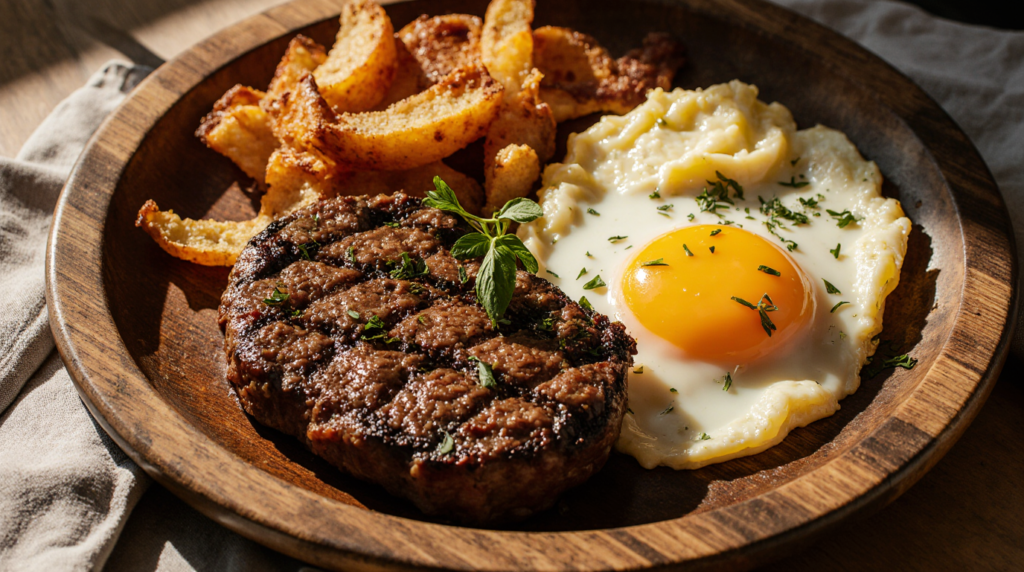
Ingredients & Prep
Meat Prep Essentials
Success with this steak and eggs recipe begins 30 minutes before cooking. Remove your steaks from the refrigerator and pat them completely dry with paper towels—moisture prevents the crucial crust formation that makes this recipe shine. Generously season both sides with kosher salt and freshly ground black pepper at least 15 minutes before cooking; this allows salt to penetrate the meat rather than sit on the surface.
If your steaks are particularly thick or budget-cut, consider dry-brining: salt them uncovered in the refrigerator for 12-24 hours. This breaks down proteins and distributes moisture evenly throughout, guaranteeing tenderness in every bite of your steak and eggs recipe.
Marinade and Seasoning Options
While this steak and eggs recipe shines with minimal seasoning, simple marinades elevate it further. A basic butter baste combines softened butter, minced garlic, fresh rosemary, and thyme—brush this on steaks during the final cooking minutes for restaurant-level results.
For a deeper flavor profile, marinate steaks in a mixture of olive oil, balsamic vinegar, Worcestershire sauce, minced garlic, and Italian herbs for 2-4 hours (not overnight, as extended marinating can make meat mushy). The acid in vinegar gently tenderizes while enhancing the steak and eggs recipe’s overall complexity.
Pantry Staples for This Recipe
Stock your kitchen with these essentials for consistent steak and eggs recipe success: high-smoke-point oils (avocado or refined coconut oil), butter for basting, kosher salt, freshly ground black pepper, garlic, and fresh or dried herbs like rosemary, thyme, and oregano. Quality Worcestershire sauce, soy sauce, and balsamic vinegar add depth without extra effort.
Step-by-Step Cooking Instructions
Pre-Cooking Preparation
Begin your steak and eggs recipe by removing steaks from the refrigerator 30 minutes before cooking—room temperature meat cooks evenly. Pat steaks dry using paper towels (this ensures proper crust formation). Season generously with kosher salt and freshly ground black pepper on both sides. Place a cast-iron skillet over medium-high heat and let it preheat for 3-5 minutes until a drop of water immediately sizzles and evaporates on contact. You’ll know it’s ready when you can comfortably hold your hand 2 inches above the surface for only 2-3 seconds.
The Searing Process
Once your pan is smoking hot, add a high-smoke-point oil (about 1 tablespoon) and let it coat the bottom. Carefully place steaks in the pan—they should sizzle immediately. Resist the urge to move them; let steaks sit undisturbed for 3-4 minutes to develop that coveted golden-brown crust. Flip once and cook for another 3-4 minutes for medium-rare. During the final minute, add a knob of butter, crushed garlic cloves, and fresh rosemary sprigs to the pan, tilting it so the foaming butter continuously basts the steaks.
Cooking Your Eggs
While steaks rest (see below), crack eggs into the same pan (without washing it—those browned bits add incredible flavor to your steak and eggs recipe). For this recipe, butter-basted eggs cook perfectly in the residual heat and rendered fat. Cook until whites are set but yolks remain runny, approximately 3-4 minutes over low heat. This timing ensures both components finish simultaneously.
Checking for Doneness
Use a meat thermometer for precision with your steak and eggs recipe. Remove steaks from heat at 125°F for medium-rare (they’ll continue cooking while resting). If you prefer medium, cook to 135°F; medium-well at 145°F. Insert the thermometer into the center without touching bone for accurate readings.
The Critical Resting Step
This step makes or breaks your steak and eggs recipe. Remove steaks from the pan and place them on a warm plate for 5 minutes. During this resting period, muscle fibers relax and reabsorb the juices that rose to the surface during cooking. Cutting into a steak immediately releases these juices onto the plate rather than keeping them in the meat. Resting guarantees every bite of your steak and eggs recipe is succulent and tender.
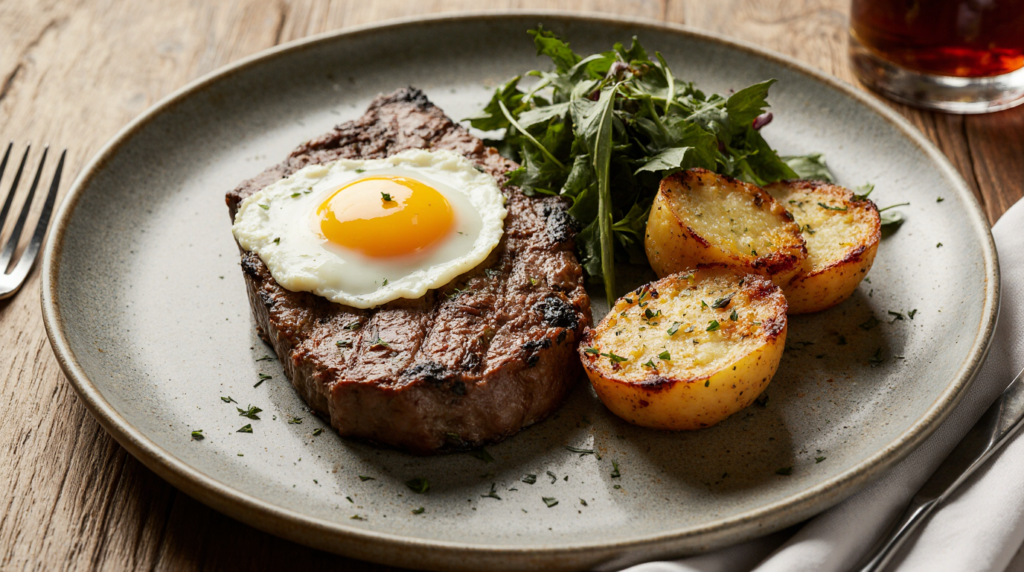
Pro Tips for Perfect Steak and Eggs Recipe
Avoiding Tough or Dry Meat
The most common mistake in this steak and eggs recipe is overcooking. Use a meat thermometer rather than guessing—it eliminates this problem entirely. Don’t overcrowd your pan; if cooking multiple steaks for your steak and eggs recipe, work in batches rather than overlapping pieces. Overcrowding drops pan temperature and causes steaming rather than searing.
Another game-changer: baste with butter during the final cooking minute. This adds fat and flavor while keeping the steak and eggs recipe components moist. Never press down on steaks with a spatula (this releases juices you want to keep), and always slice against the grain when plating for maximum tenderness.
Essential Tools and Equipment
Invest in a reliable instant-read meat thermometer—it’s the single best tool for perfecting your steak and eggs recipe. A cast-iron skillet is essential; its heat retention and natural non-stick properties (when seasoned) create the superior crust this recipe demands. A sharp knife for slicing, heavy-bottomed pan for even heat distribution, and kitchen tongs (rather than a fork that pierces meat) round out your steak and eggs recipe toolkit.
Storage and Reheating Strategies
Leftover steak and eggs recipe components should be refrigerated separately. Cooked steaks keep for 3-4 days in an airtight container. To reheat without drying out, place in a 275°F oven for 5-10 minutes until warmed through. Never microwave steaks from your steak and eggs recipe, as uneven heating causes tough, rubbery texture.
For longer storage, freeze cooked steak in beef broth or stock for up to 3 months. The broth protects against freezer burn and makes reheating easy—simply simmer gently until heated through, then pat dry before serving.
Flavor Variations
Spicy Twist on Steak and Eggs Recipe
Transform your steak and eggs recipe with heat by creating a spicy marinade: combine olive oil, lime juice, minced jalapeños, chipotle peppers in adobo sauce, and cumin. Marinate steaks for 2-4 hours, then cook using the standard method. Top finished eggs with crispy bacon bits and a sprinkle of cayenne pepper. This variation pairs beautifully with cilantro-lime hash browns for a truly elevated steak and eggs recipe experience.
Keto and Paleo Versions
This steak and eggs recipe is naturally keto and paleo-friendly, but amplify it by eliminating any sugar-containing marinades. Stick to pure butter, olive oil, garlic, and herbs for both proteins. Serve alongside keto-approved sides like creamed spinach or cauliflower rice. The high protein and fat content makes this steak and eggs recipe perfect for maintaining ketosis while enjoying restaurant-quality results.
Global Flavor Profiles
Give your steak and eggs recipe an Asian twist by marinating in a mixture of soy sauce, sesame oil, ginger, garlic, and a touch of honey for 3-4 hours. Cook traditionally, then top eggs with furikake seasoning and microgreens for visual appeal.
For an Italian-inspired steak and eggs recipe, brush steaks with a pesto made from fresh basil, garlic, pine nuts, Parmesan, and olive oil during the final cooking minute. Serve eggs sunny-side up and sprinkle with fresh oregano and aged balsamic vinegar.
Mediterranean fans will love a Greek variation: marinate in olive oil, red wine vinegar, oregano, thyme, and garlic, then serve alongside feta cheese, Kalamata olives, and tomatoes for a complete steak and eggs recipe that transports you to the Mediterranean.
Serving Suggestions
Perfect Steak and Eggs Recipe Side Dishes
This steak and eggs recipe shines when paired thoughtfully. Creamy mashed potatoes or buttered hash browns provide comfort and absorb delicious pan juices. Grilled asparagus tossed in garlic butter adds elegance and nutrition. Sautéed mushrooms complement the savory steak beautifully—try cremini, shiitake, or a mix for depth.
For lighter presentations of your steak and eggs recipe, serve alongside a fresh green salad with vinaigrette, roasted cherry tomatoes, or steamed broccoli tossed in garlic and oil. Crispy bacon or turkey sausage rounds out the protein profile perfectly.
Wine and Beverage Pairings
Pair your steak and eggs recipe with beverages that complement both components. Cabernet Sauvignon is the classic choice for red meat—its tannins cut through richness beautifully. Pinot Noir offers a lighter option with elegant complexity. For beer drinkers, Hefeweizen provides refreshing yeast notes, while Porter or Stout adds roasted, complex flavors.
For non-alcoholic pairings, fresh-squeezed orange juice complements the richness of this steak and eggs recipe, as does strong espresso or cappuccino for brunch settings.
Frequently Asked Questions About This Steak and Eggs Recipe
Can I use frozen steak in this recipe?
Technically yes, but thawing overnight in the refrigerator first ensures more even cooking and better crust development for your steak and eggs recipe. Never thaw at room temperature (bacterial growth risk). In a pinch, defrost under cold running water for 1-2 hours, then pat thoroughly dry before cooking.
How do I fix overcooked steak in this recipe?
Prevention is always better than cure, but if you’ve overcooked steaks for your steak and eggs recipe, slice them thinly and serve with a rich pan sauce made from butter, garlic, and beef broth. The sauce adds moisture and flavor to compensate. Next time, remove steaks 5°F before target temperature to account for carryover cooking.
Is this steak and eggs recipe safe for pregnant women?
The steak in this recipe is safe when cooked to proper internal temperature (145°F), which eliminates harmful bacteria. However, pregnant women should ensure eggs reach 160°F for food safety, meaning the sunny-side-up preparation needs modification—cook eggs until whites are set and yolks are at least partially cooked. Consult your healthcare provider for personalized guidance.
How many calories are in a serving of this steak and eggs recipe?
A typical serving with a 6-ounce ribeye steak and two large eggs contains approximately 500-600 calories, depending on cooking method and added butter. Most calories come from protein (35-40g) and healthy fats.
Can I prep this steak and eggs recipe ahead of time?
Partially—season steaks and prepare marinade the night before. However, cook the steak and eggs recipe fresh the morning you plan to eat it for optimal quality and texture. Pre-cooked steak loses its tender texture unless reheated carefully.
What if I don’t have a meat thermometer?
While not ideal, the touch method works for experienced cooks: rare feels soft like your inner palm, medium-rare feels like the space between thumb and forefinger when relaxed, medium feels like your cheek. For your steak and eggs recipe, we recommend investing in an inexpensive instant-read thermometer ($15-30) for consistent results.
Conclusion
Mastering this steak and eggs recipe transforms your breakfast game entirely. You now have the knowledge, techniques, and variations to create restaurant-quality results in your own kitchen—consistently, reliably, and impressively.
Ready to impress your family or significant other? Fire up your skillet and try this steak and eggs recipe tonight. The combination of perfectly seared meat, creamy eggs, and restaurant-level technique takes just 20 minutes but delivers results worthy of a five-star brunch menu.
Join thousands of home cooks who’ve elevated their breakfast routine with this exact steak and eggs recipe. Share your results in the comments below—I’d love to hear how yours turned out and which flavor variation becomes your favorite.
Craving more elevated breakfast recipes? Check out our complete guide to perfecting eggs Benedict or explore our collection of quick weeknight protein dishes to keep your kitchen inspiration flowing.
Happy cooking!






Leave a Reply